AirVendor: healthcare compliance software for hospitals
AirVendor is the platform hospitals and healthcare facilities use to manage site access and compliance for the industry representatives who come through their doors. We have been its development team since January 2016, and we still are.
The problem
Medical device and pharmaceutical representatives need to be inside hospitals. They train theatre staff, support equipment during procedures, and manage stock. Before they are let past reception, someone has to know who they are, who they work for, whether their immunisations and police checks are current, whether they have completed the facility's induction, and whether they are cleared for the area they are heading into.
Traditionally that check happened at a desk, on paper, by whoever was on shift. It is slow, it is inconsistent between sites, and the record of who was where and when is only as good as the sign-in book. For a facility that has to be able to demonstrate compliance after the fact, that is a genuine risk rather than an administrative annoyance.
AirVendor's answer was to move the whole process into software: credentials verified once and held centrally, access decided against them, and an auditable record produced as a side effect of people simply doing their jobs.
What we built
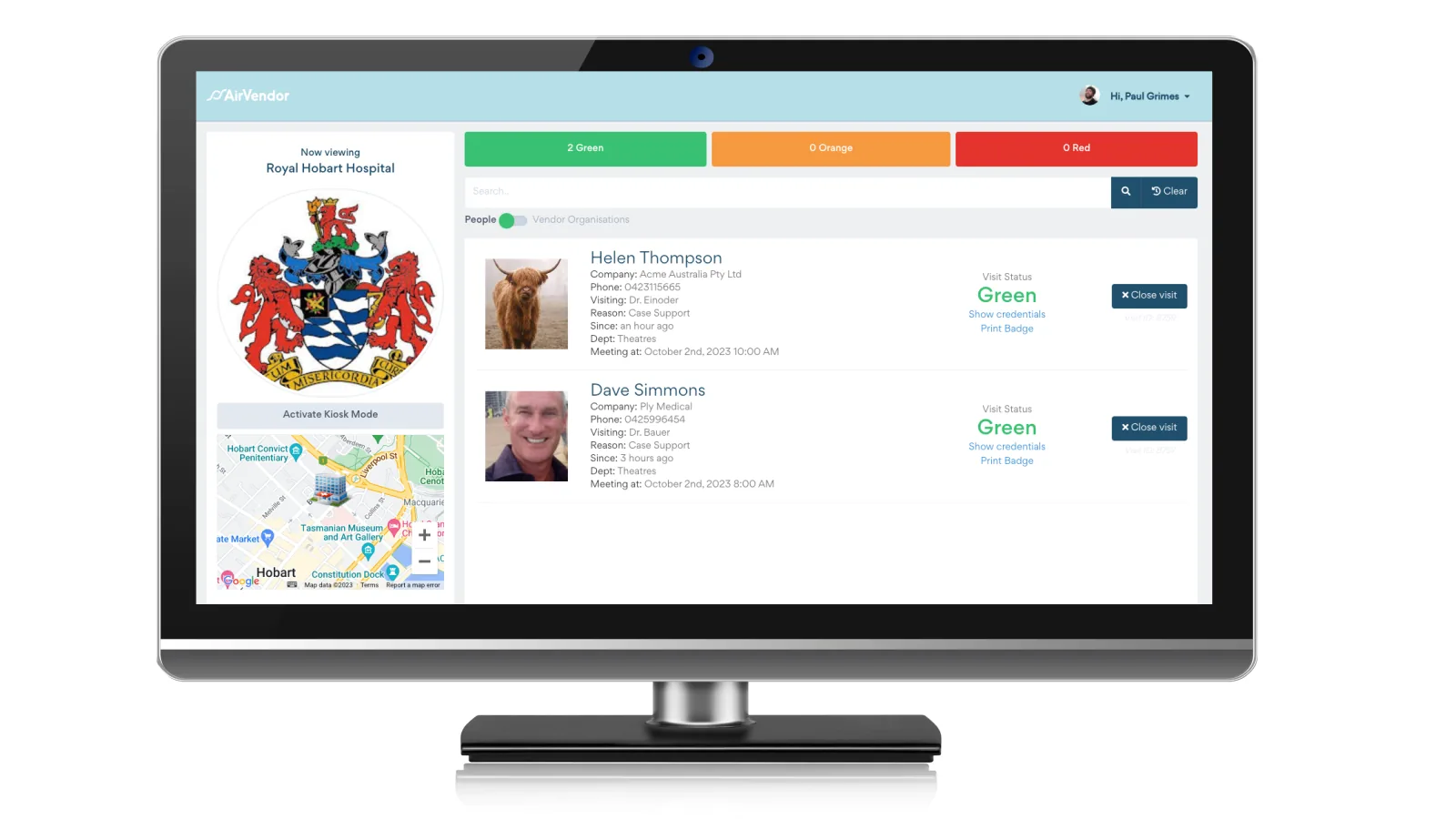
One product across two surfaces, because the two sides of this problem do not work the same way. Facility staff need a web platform: dashboards, credential review, approvals, reporting, and the administrative depth that comes with running a policy across a whole site. The representatives need something in their hand at the door, so they get mobile apps.
AirVendor describes its users as healthcare facilities of every shape, from hospitals and day surgeries through to doctors' offices, urgent care, aged care and rehabilitation, and on the other side the healthcare industry representatives who are employed by vendors or working as independent contractors. Those two groups have almost nothing in common as software users except the moment they meet, which is the moment the product has to get right.
Why one API underneath both
The web platform and the mobile apps are served by a single Laravel API. That is the API-first approach we take on every build, and it matters more than usual here: a rule about who is allowed where gets written once, so it cannot drift between the version a facility sees and the version a representative sees. Two codebases enforcing the same policy is how compliance systems end up quietly disagreeing with themselves.
The same thinking applies to the data underneath. We settle the data layer before anything is drawn on a screen, because in a system whose real output is being able to answer questions about the past, the shape of the records is the product. Get that right and the software stays straightforward to extend for years, which is roughly what has happened here.
The outcome
- One product across two surfaces: a web platform for facilities, mobile apps for reps
- Access control and compliance handled in software rather than on paper at reception
- A relationship running since January 2016, with the same team still supporting it
- AirVendor's director records the engagement on Clutch as a $200,000 to $999,999 project, still ongoing
The part we are most pleased about is the least dramatic. This platform has been in production for the better part of a decade in an environment where being wrong has consequences, and it has been maintained continuously rather than rebuilt. That is what getting the foundations right actually buys you.
What we did on this engagement
Healthcare software development, custom software development, mobile app development, scoping, CTO services and technical consultation. Effectively, in the client's own words, an outsourced technology department.
About AirVendor
AirVendor is at the forefront of revolutionising the healthcare industry by fostering greater transparency and building stronger partnerships between vendors and healthcare organisations. Their web-based solution is designed to empower hospitals and healthcare facilities (HCFs) with efficient access control and compliance management for healthcare industry representatives (HCIRs).